
018 Burnout After Layoffs: The Cost of Staying
Layoffs do not eliminate work. Explore survivor burnout, AI-era job anxiety, unequal cognitive load, and the hidden human cost for product and UX teams.
🎧 Listen to this episode on Apple Podcasts, Spotify, or your favorite platform.
The Work Does Not Disappear: Layoff Survivor Burnout in Product and Design
One of the crueler illusions in organizational restructuring is that when roles disappear, the work disappears with them.
Anyone who has worked in product management, UX design, engineering, or customer experience knows what often happens instead. The org chart gets smaller, and the backlog does not. Support needs remain. Stakeholder expectations continue. The people who stay inherit responsibilities, uncertainty, and the pressure to prove they were worth keeping.
That is one form of layoff survivor burnout: the physical, mental, and emotional strain experienced by employees who remain after coworkers are let go.
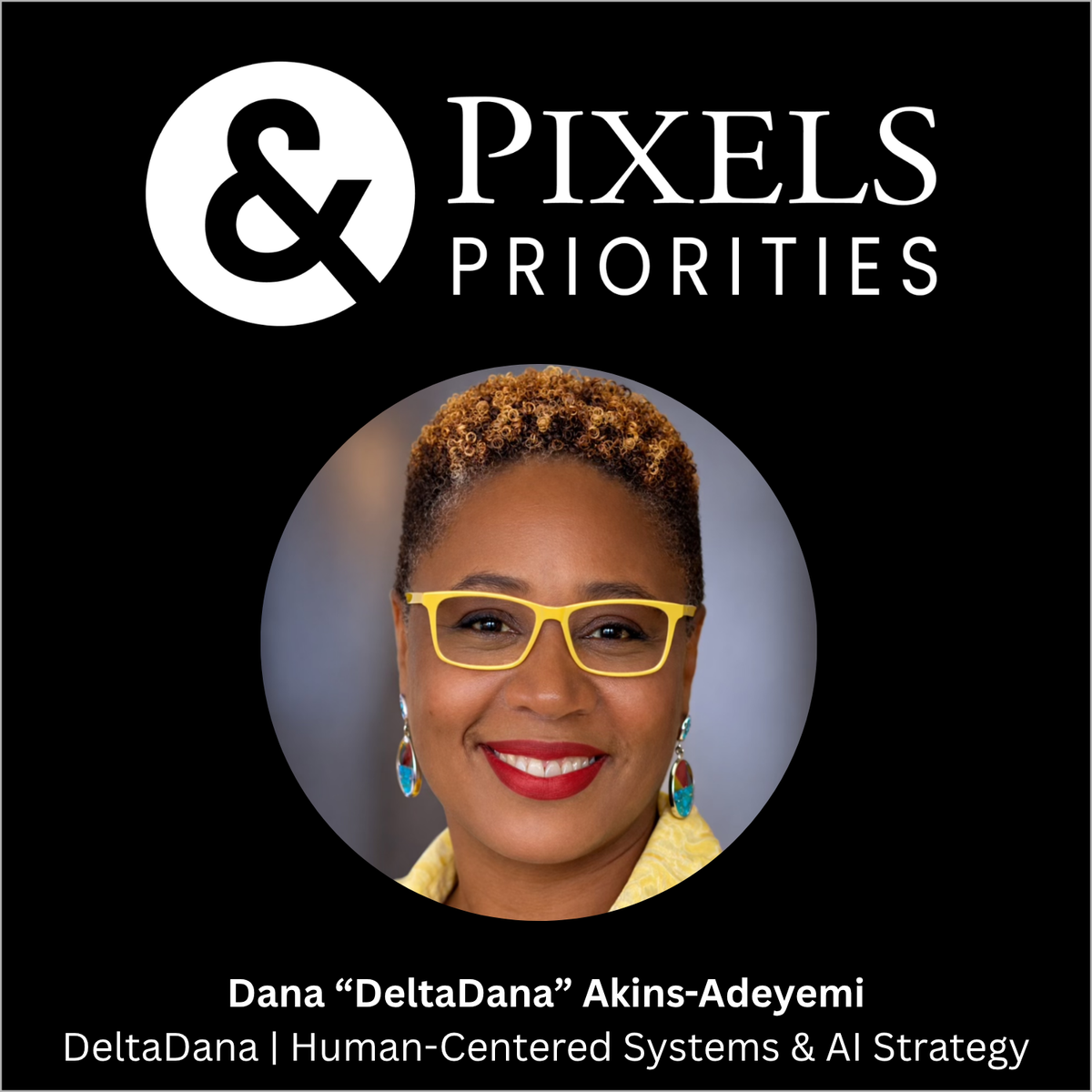
In our conversation with Dana “DeltaDana” Akins-Adeyemi, we kept returning to a difficult truth: layoffs affect the people who leave and the people who stay in different yet overlapping ways. One group faces the exhausting job of finding work. The other could face a larger workload, lower morale, disrupted relationships, and the fear that another round is coming.
Layoffs Redistribute More Than Tasks
DeltaDana has seen several cycles of disruption across engineering, manufacturing, design, education, and consulting. She connected today’s anxiety about AI and job replacement to earlier periods of automation, offshoring, recession, and organizational redesign.
The technology changes, and the pattern feels a little too familiar.
“The few people who are left have to double up or triple up their jobs.” — Dana “DeltaDana” Akins-Adeyemi
A product designer leaves, and another designer absorbs the research, design-system maintenance, and stakeholder meetings. A product manager is cut, and someone inherits the roadmap, ceremonies, reporting, and customer escalations. A researcher disappears, but the organization still expects evidence-based decisions.
When organizations remove roles without intentionally removing, pausing, or redesigning the work, they could be concealing a capacity problem inside the calendars and nervous systems of the people who remain.
Survivor Burnout Is Not Gratitude Gone Wrong
People who keep their jobs after layoffs are often expected to feel lucky. Many do feel grateful. Gratitude, however, does not cancel out fear, grief, anger, or exhaustion.
I shared a period many years ago when my entire team was being let go, and I became the sole developer responsible for hundreds of web applications. I moved so quickly into survival mode that I struggled to see how unsustainable the situation had become.
“I had just braced myself: this is where I am. I’ve got to keep things going.” — Metsy Rose
That sentence describes a reflex many high performers know well. When a system becomes unstable, we stabilize it. We cover gaps. We protect customers. We keep the release moving. The emergency becomes the operating model.
Product and design professionals are often hired to solve ambiguity and help teams navigate change, and those strengths can become traps when we use them to make an unhealthy system appear functional.
Burnout Is More Than Overwork
Workload is only the visible layer.
“Burnout is not just physical. There’s a mental and emotional component as well as a physical component.” — Dana “DeltaDana” Akins-Adeyemi
After layoffs, people may be doing their regular jobs while scanning for warning signs. They interpret rumors, notice changes in leadership behavior, and wonder whether another cut is coming. They may also watch former coworkers struggle to find work and imagine themselves in the same position.
There is social loss, too. A trusted teammate may have helped you think through difficult stakeholder conversations, offered honest feedback, or simply made a hard week survivable. When that person leaves, the team loses more than capacity. It loses part of its informal support system.
The Load Is Not Distributed Equally
DeltaDana also described the additional pressure of being a Black woman in engineering and the cognitive load that marginalized or neurodivergent professionals may carry. Some people are already translating their thinking, monitoring how they are perceived, adapting to a dominant culture, or wondering whether instability makes them more vulnerable.
In a healthy workplace, those pressures still exist. During layoffs and restructuring, they can intensify.
A universal message is not the same thing as equitable support. Asking everyone to “stay focused” may ignore very different realities underneath the request. Human-centered leadership listens for work that is hard to see: masking, translating, anticipating bias, mentoring others, and absorbing cultural strain.
Culture is part of workload.
AI Is a New Chapter in an Old Story
Our conversation did not treat AI as the sole cause of current burnout. DeltaDana's career history placed it inside a longer cycle of technological change and organizational overconfidence.
Companies have repeatedly assumed that a new technology or restructuring model will let them remove people while preserving the same outcomes. They may later discover that the work contained more judgment, context, relationships, and tacit knowledge than a spreadsheet captured.
For product and UX teams, the practical question is not only, “What can AI accelerate?” It is also, “What human knowledge, collaboration, and responsibility are we at risk of erasing?”
What Teams Can Do After Layoffs
There is no tidy checklist that removes the emotional impact of layoffs. Teams can still reduce avoidable harm:
- Re-scope the work, not just the workforce. Decide what will stop, pause, or change.
- Make inherited work visible. Track new ownership, meeting load, support work, and emotional labor.
- Create room for honest reactions. Relief, grief, frustration, and fear can coexist.
- Check for unequal cognitive load. Ask who is translating, masking, mentoring, or reassuring others.
- Protect boundaries and community. Staying connected matters, but employees also need permission to protect their energy.
J described the tension many caring professionals face:
“There is always this push and pull: how much are you going to give to the community, and how much are you going to give back to yourself?” — J Schuh
That boundary may need to be redrawn repeatedly.
Questions for Reflection
- If your organization has reduced headcount, which work was actually removed?
- What invisible emotional, social, or cultural labor are people carrying?
- How can leaders acknowledge uncertainty without asking employees to perform reassurance?
Key Takeaways
- Layoffs often transfer work and uncertainty rather than eliminating them.
- Survivor burnout includes fear, grief, social loss, and distrust, not only longer hours.
- Marginalized and neurodivergent professionals may carry additional cognitive and cultural load.
- AI-era restructuring echoes older cycles of automation and organizational overconfidence.
- Human-centered leadership begins by making the full cost of work visible.
Final Thoughts
Burnout is often treated as an individual wellness problem inside an organizational design problem.
A breathing exercise cannot fix a workload that should belong to three people. Resilience training cannot replace trust. Gratitude for keeping a job cannot erase the fear of losing it next.
The first step is naming what happened honestly: the team changed, the relationships changed, the workload changed, and people may not be fine simply because the work continued.
If you have lived through layoffs from either side, what do you wish your organization had understood about the human cost?
Share your perspective, and listen to Episode 018 of Pixels & Priorities for our full conversation with Dana “DeltaDana” Akins-Adeyemi.
– Metsy
Co-host, Pixels & Priorities
Stay Connected
🎧 Listen to new episodes every Tuesday on Apple Podcasts, Spotify, or your favorite podcast platform. Please leave us a rating, submit a review, and share with a friend. It helps more people find the show and join the conversation.
Connect on LinkedIn: Metsy Rose | J Schuh | Pixels & Priorities