
012 UX Research to Product Strategy in the AI Era
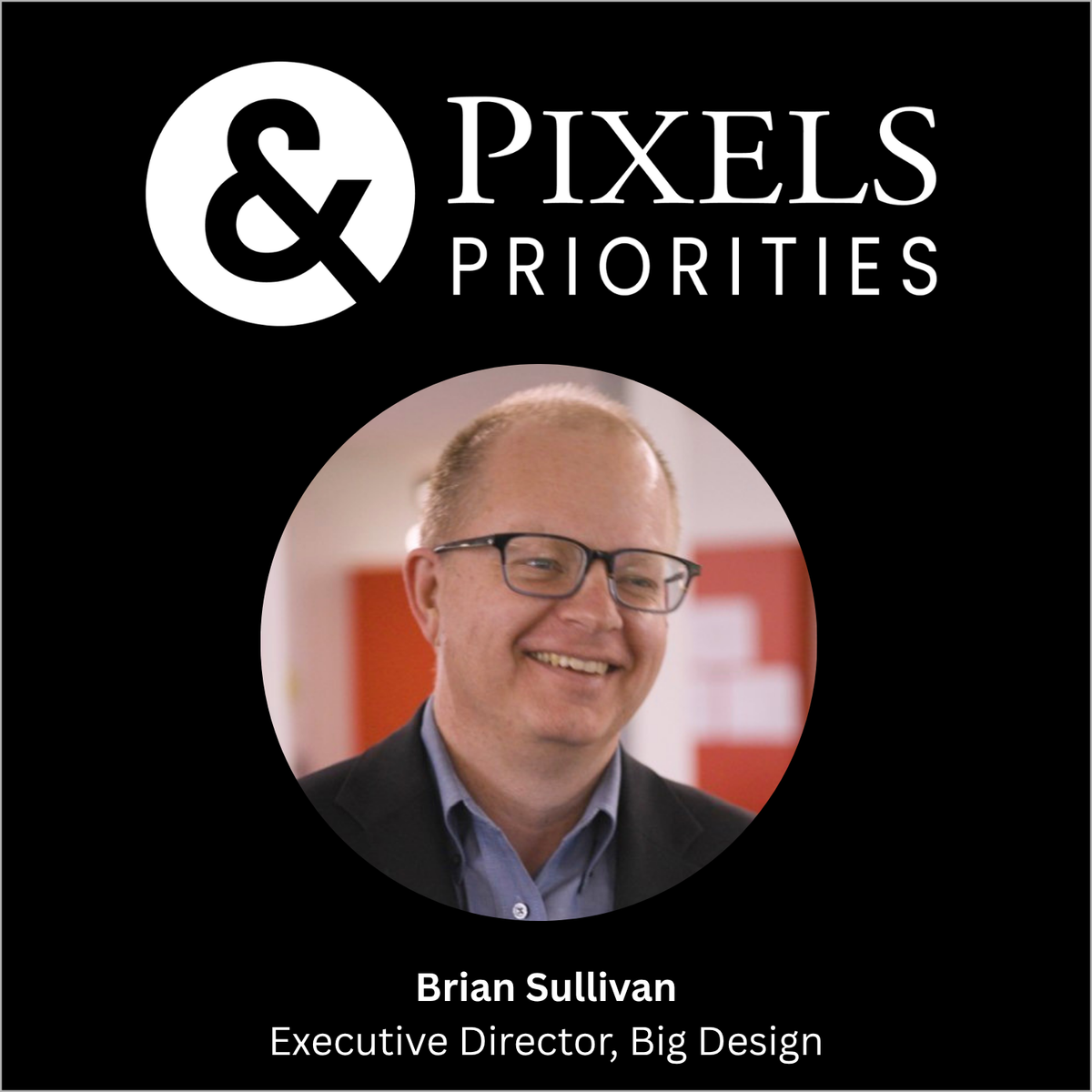
Metsy Rose, J Schuh, and Brian Sullivan explore stakeholder empathy, UX research, product strategy, and why AI can surface signals, but human judgment still drives meaningful product decisions.
🎧 Listen to this episode on Apple Podcasts, Spotify, or your favorite platform.
Why UX Research Needs a Product Strategy Lens in the AI Era
There is a familiar product and design habit many of us fall into. When we talk about empathy, we usually start with the user.
Human-centered design depends on understanding the people we are building for, but in our conversation with Brian Sullivan, Executive Director of the Big Design conference, one idea became a central theme throughout the discussion: user empathy is necessary, but it is not enough.
If we want research to influence product decisions, guide strategy, and survive the AI-era pressure for speed, we have to widen the lens.
We need empathy for users.
We need empathy for customers.
We need empathy for stakeholders.
We need empathy for all stakeholders - researchers, designers, product managers, engineers, and leaders - trying to make sense of all the signals bombarding us.
“Stakeholders make or break every project.” - Brian Sullivan
Empathy Beyond the User
In product management and UX design, empathy often gets treated as something that belongs inside user interviews, usability tests, personas, or journey maps.
But empathy is bigger than that.
Brian reminded us that when teams start with only the user, they may unintentionally miss the ecosystem around the work. Stakeholders hold context. Support teams hear recurring pain. Product leaders understand business constraints. Engineers know where complexity hides. Customers may not always be the same people as users.
A customer might be the buyer.
A user might be the front desk agent.
A stakeholder might be the person whose operational process will break if we design the wrong thing.
When we skip stakeholder empathy, we do not just risk hurt feelings or missed meetings. We lose data, context, and ultimately, influence.
This means stakeholder mapping should not be treated as a dusty workshop artifact. It should be part of the research strategy.
Ask:
- Who influences this decision?
- Who will be impacted by this product or service?
- Who holds operational knowledge?
- Who needs to be informed versus deeply involved?
- What type of insight can each person contribute?
This is not just about office politics. This is about holistic product intelligence.
Research Is More Than Design Validation
One of the most important pivots in the conversation came when Brian talked about the future of UX research.
“Research is critical, and it informs design decisions. But it informs more than design decisions.” - Brian Sullivan
Research matters more every year.
Too often, UX research gets pulled in late to validate a screen, test a flow, or squeeze “a little bit more juice out of the lemon.” Yes, that work is valuable, especially inside large systems where small improvements can create meaningful impact, but research can do more.
Research can shape product direction.
Research can reveal market patterns.
Research can connect customer behavior to business outcomes.
Research can help teams understand the full funnel, not only the interface.
That is why Brian predicted a sharper pivot from UX research and UX design toward product research and product design.
This does not mean replacing UX. It means expanding the frame.
A UX research lens asks, “Can the user complete this task?”
A product research lens also asks, “Is this the right problem, for the right customer, at the right moment, with the right business model and measurement strategy?”
In an AI-enabled workplace, the second set of questions may become increasingly important.
The Three Types of Empathy Product Teams Need
Brian also walked through three useful types of empathy: cognitive, emotional, and compassionate.
Cognitive empathy is understanding what someone may be thinking. In research, this is listening, observing, and trying to understand the logic behind someone’s actions.
Emotional empathy is feeling what someone else feels without judging them. This matters when teams are trying to understand frustration, anxiety, confusion, trust, or delight.
Compassionate empathy goes further. It creates a desire to act.
“With compassionate empathy, it goes beyond understanding and feeling. You’re compelled to do something about it.” - Brian Sullivan
Moving toward compassionate empathy is what product teams should aim for.
It is not enough to collect insights.
It is not enough to document pain points.
It is not enough to say, “The research says…”
The question is: what will we do differently because we understand?
“Before you can put on someone else’s shoes, you have to take your own shoes off.” - Brian Sullivan
This hard work requires us to set down our assumptions, our favorite solutions, our role-based defensiveness, and sometimes even our roadmap.
And that is where better product decisions begin.
AI Gives Signals. Humans Create Strategy.
The conversation also moved into AI, and this is where Brian offered a helpful reality check for product and design teams.
“AI is only going to give you signals. It’s not going to know how to act on that.” - Brian Sullivan
I may need to write that quote on a sticky note on my monitor for the next time I hear about a new AI tool touted to revolutionize my work.
AI can summarize.
AI can generate.
AI can compare.
AI can accelerate prototypes.
AI can help with prompts, briefs, research synthesis, and experimentation.
AI does not have empathy. It does not understand organizational nuance, and it does not know which stakeholder relationship is fragile. It does not know when the technically correct answer is politically impossible or emotionally tone-deaf.
That is where we - product managers, UX researchers, UX designers, and product designers - still matter deeply.
Brian’s advice was not to fear AI. It is to broaden our value.
Think end to end. Tie work to company goals and customer outcomes. Understand the upper funnel and lower funnel. Partner with AI for rapid experimentation, but stay responsible for judgment, measurement, and meaning.
“Don’t hold on so much to that UX adjective. Become a miniature CEO.” - Brian Sullivan
That may sound bold, but the heart of it is practical: understand the business, the customer, the user, the ecosystem, and the outcome.
Curiosity Is a Product Skill
J brought another important thread into the conversation: researchers are often some of the most curious people in the room.
They do not ask questions because they are trying to be difficult. They ask because something sparked their interest. They want to validate, explore, test, and understand.
The researcher mindset is becoming more valuable in the AI era.
J talked about curiosity, fun, and playfulness as future-facing mindsets. If we approach AI as a competition or a threat, we may freeze. If we approach it as something to explore, we give ourselves more room to learn.
Brian connected that idea to a line from Ted Lasso:
“Be curious, not judgmental.”
For product and UX professionals, curiosity is not fluff. It is how we avoid stale assumptions. It is how we discover better questions. It is how we keep learning when the tools, processes, and expectations keep shifting.
Questions for Reflection
- Where are we treating research as validation when it could be shaping strategy earlier?
- Which stakeholders have insight we are unintentionally leaving out?
- How can we use AI to accelerate signals without outsourcing judgment?
Key Takeaways
- User empathy matters, but product teams also need stakeholder, customer, and team empathy.
- Stakeholder mapping is not just a communication tool. It is a research and strategy tool.
- UX research is evolving toward a broader product research mindset.
- AI can generate signals, but humans still decide what those signals mean.
- Curiosity, adaptability, and compassionate empathy are becoming core product skills.
Final Thoughts
This conversation reminded us that the future of product and design work is not simply about moving faster.
It is about seeing more clearly.
Clearer stakeholders.
Clearer customer needs.
Clearer product outcomes.
Clearer human impact.
AI may accelerate the work around us, but empathy helps us understand what the work is for. Research helps us find the signal. Product strategy helps us decide what to do next.
And maybe the real shift ahead is not from UX to product, or from human work to AI work.
Maybe it is from narrow execution to wider responsibility.
If this conversation sparks something for you, listen to the full episode and bring the questions back to your own team. The future is being shaped in the small decisions we make every day.
– Metsy
Co-host, Pixels & Priorities
Stay Connected
🎧 Listen to new episodes every Tuesday on Apple Podcasts, Spotify, or your favorite podcast platform. Please leave us a rating, submit a review, and share with a friend. It helps more people find the show and join the conversation.
Connect on LinkedIn: Metsy Rose | J Schuh | Pixels & Priorities