
005 Designing at the Speed of AI: Part 2
Metsy Rose, J Schuh, and Preston McCulley explore practical AI workflows for product managers and UX designers, including automation, iteration, adaptive experiences, and AI-powered product strategy.
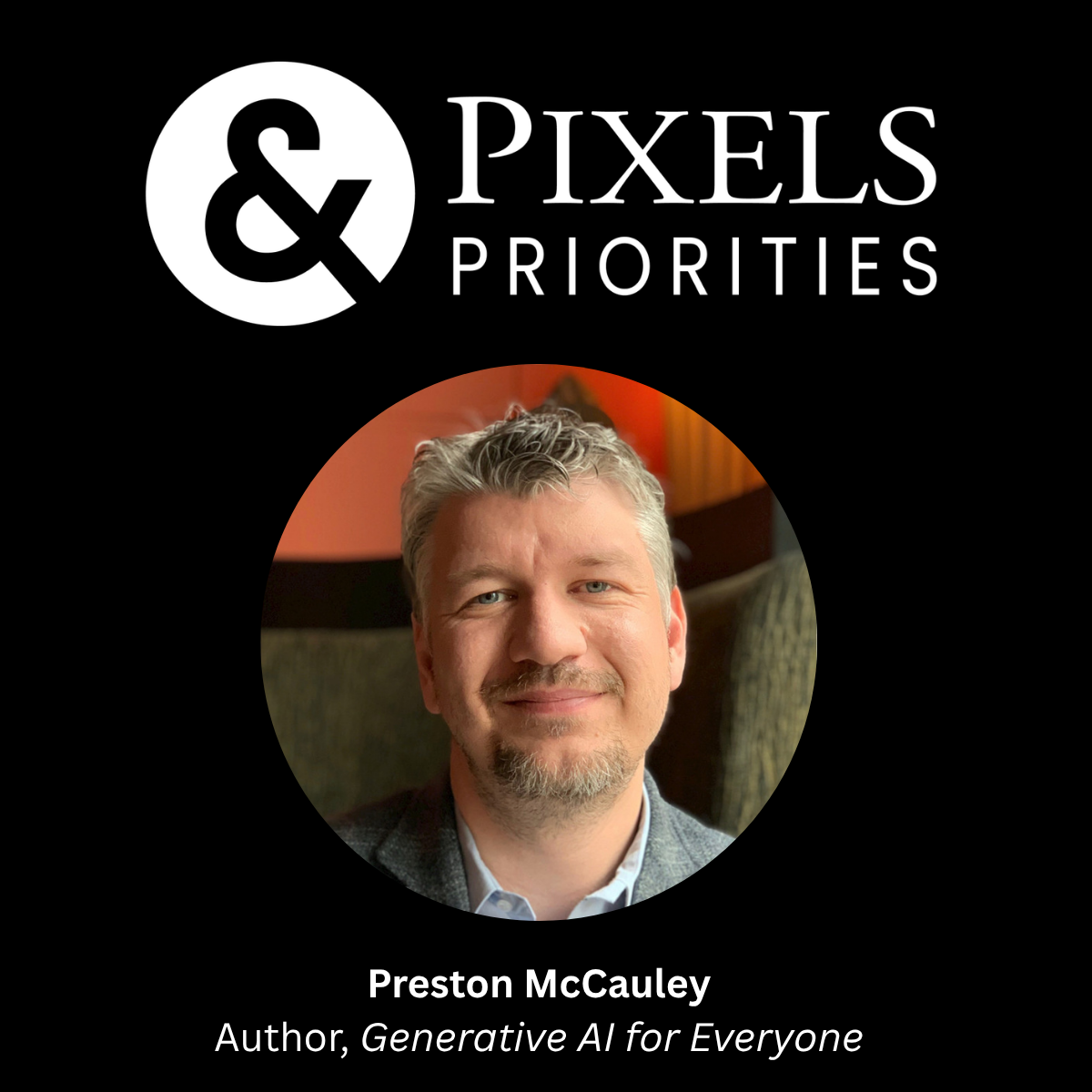
🎧 Listen to this episode on Apple Podcasts, Spotify, or your favorite platform.
There’s a growing misconception floating through product management, UX design, and digital product development right now:
That mastering AI means finding the perfect prompt.
But as anyone who has spent real time working with AI systems quickly discovers, effective AI workflows are rarely magical one-click solutions. They are iterative, experimental, collaborative, and surprisingly human.
In Part 2 of this conversation with Preston McCauley, we dive deeper into how designers, product managers, and developers can realistically begin integrating AI into daily work.
The conversation moves beyond hype and into practical reality:
- building AI habits
- refining workflows
- automating repetitive work
- designing adaptive experiences
- balancing experimentation with human judgment
Perhaps most importantly, the episode reframes AI not as a replacement for expertise, but as a catalyst for evolving how expertise gets applied.
The Most Valuable AI Habit Takes 10 Minutes
I asked Preston how we could approach AI knowledge in a more realistic way:
If someone only has 10 minutes a day to build an AI habit, where should they start?
Rather than recommending complicated prompt libraries or advanced automation systems, he suggests starting with reflection:
asking AI how you currently use it and how those workflows could improve.
“The key is: this is a continuous dialogue. It’s iteration.” — Preston McCauley
Many of us still approach AI like a vending machine: insert prompt, receive perfect answer.
But AI in product management and AI for designers rarely works that way.
Effective workflows typically emerge through:
- experimentation
- refinement
- feedback loops
- reusable systems
- evolving context
In many ways, the process resembles product design itself.
Iteration wins.
Why So Many People Quit AI Too Early
Preston argues that one of the biggest misunderstandings surrounding AI is the assumption that these systems are omniscient.
“People assume it’s omnipotent—like the Q character from Star Trek. It’s not.” — Preston McCauley
Instead, modern AI systems are highly dependent on:
- context
- examples
- constraints
- clarification
- iteration
- human guidance
While AI can dramatically accelerate parts of digital product development, it still struggles with layered creative complexity:
- brand nuance
- visual hierarchy
- accessibility
- emotional tone
- customer psychology
- strategic prioritization
In other words:
AI can assist creativity.
It does not automatically replace creative judgment.
AI Is Changing Product Management Faster Than Many Teams Realize
Another section of our conversation focuses specifically on product management workflows.
I asked Preston which common PM tasks AI can already help automate today, and he listed examples at machine-gun speed:
- auto-generating user stories from UI screenshots
- roadmap restructuring
- synthetic persona testing
- workflow diagram generation
- feature prioritization
- timeline estimation
- stress-testing customer flows
- comparative UX analysis
“I use an AI-first mindset: ‘What am I doing day-to-day, and what could I automate—or at least speed up?’” — Preston McCauley
That mindset could be a defining difference between teams that thrive during AI transformation and teams that struggle.
Because the real value of AI in product management may not simply be faster documentation.
The real value may be cognitive expansion:
the ability to analyze more possibilities, perspectives, edge cases, and customer pathways than teams could realistically process manually.
Don't worry though. We don't believe AI is infallible.
Instead, Preston repeatedly emphasizes that AI should provide perspective, not unquestioned truth.
UX Design Is Becoming More Adaptive
Another fascinating part of our conversation was around the idea of adaptive and personalized experiences.
Preston introduces a concept he currently calls “metacognitive UX,” describing systems capable of dynamically reshaping experiences based on individual user preferences and behavior.
Imagine:
- interfaces adapting to preferred learning styles
- navigation shifting based on behavior patterns
- content formats changing dynamically
- accessibility becoming fluid rather than static
- experiences personalizing in real time
“The interface becomes dynamic, not bound to a single experience.” — Preston McCauley
For UX design and UI design professionals, this introduces both exciting opportunities and significant challenges.
Adaptive experiences would break many traditional assumptions around:
- design systems
- user journeys
- analytics
- testing methodologies
- interaction consistency
J jokingly refers to it as “fluid universal design,” but the implications are serious.
If customer experiences become infinitely adaptive, product and design teams may need entirely new ways to think about:
- engagement metrics
- usability testing
- personalization ethics
- accessibility frameworks
- journey mapping
The future of human-centered design may become dramatically more personalized than today’s largely static digital experiences.
AI for Designers Is Becoming Surprisingly Practical
The episode also highlights how AI is quietly transforming everyday design workflows in practical ways many teams still underestimate.
Preston shares examples ranging from:
- intelligent background removal
- automated palette generation
- design token creation
- typography recommendations
- style guide validation
- SVG layout generation from natural language
One especially compelling example involves AI-generated SVG layouts that can import directly into design tools like Figma with properly named layers and structures already intact.
That capability hints at a broader shift happening across UX design and UI design workflows:
natural language increasingly becoming part of the interface itself.
Designers may soon spend less time manually constructing repetitive structures and more time:
- refining intent
- shaping experiences
- validating usability
- guiding systems creatively
Which circles back to one of our biggest themes:
AI amplifies workflows best when humans remain deeply involved in shaping outcomes.
Human Judgment Is Still the Competitive Advantage
Despite all the discussion around automation, adaptive systems, and AI acceleration, the conversation consistently returns to one grounding principle:
Human judgment still matters.
AI can generate outputs quickly.
It can surface patterns.
It can automate repetitive tasks.
But humans still provide:
- ethical reasoning
- contextual understanding
- emotional intelligence
- strategic prioritization
- creative direction
- customer empathy
That continues to matter in today’s AI landscape, where organizations often oscillate between panic and overconfidence.
The episode offers a far more sustainable perspective:
AI is neither magic nor doom.
It is a toolset.
A rapidly evolving one.
A messy one.
A powerful one.
Ultimately, AI is still a toolset shaped by the people using it.
Final Thoughts
The future of product management, UX design, and digital product development will almost certainly involve AI-assisted workflows.
The professionals who stand out may not simply be the ones using AI the fastest. They may be the ones who:
- iterate thoughtfully
- stay curious
- build repeatable systems
- validate outputs carefully
- combine automation with human-centered thinking
The most valuable AI workflows are not built through blind automation.
They are built through experimentation, refinement, and meaningful human judgment.
The tools are accelerating, but thoughtful product and design leadership still sets the direction.
– Metsy
Co-host, Pixels & Priorities
Stay Connected
🎧 Listen to new episodes every Tuesday on Apple Podcasts, Spotify, or your favorite podcast platform. Please leave us a rating, submit a review, and share with a friend. It helps more people find the show and join the conversation.
Connect on LinkedIn: Metsy Rose | J Schuh | Pixels & Priorities