
004 Designing at the Speed of AI: Part 1
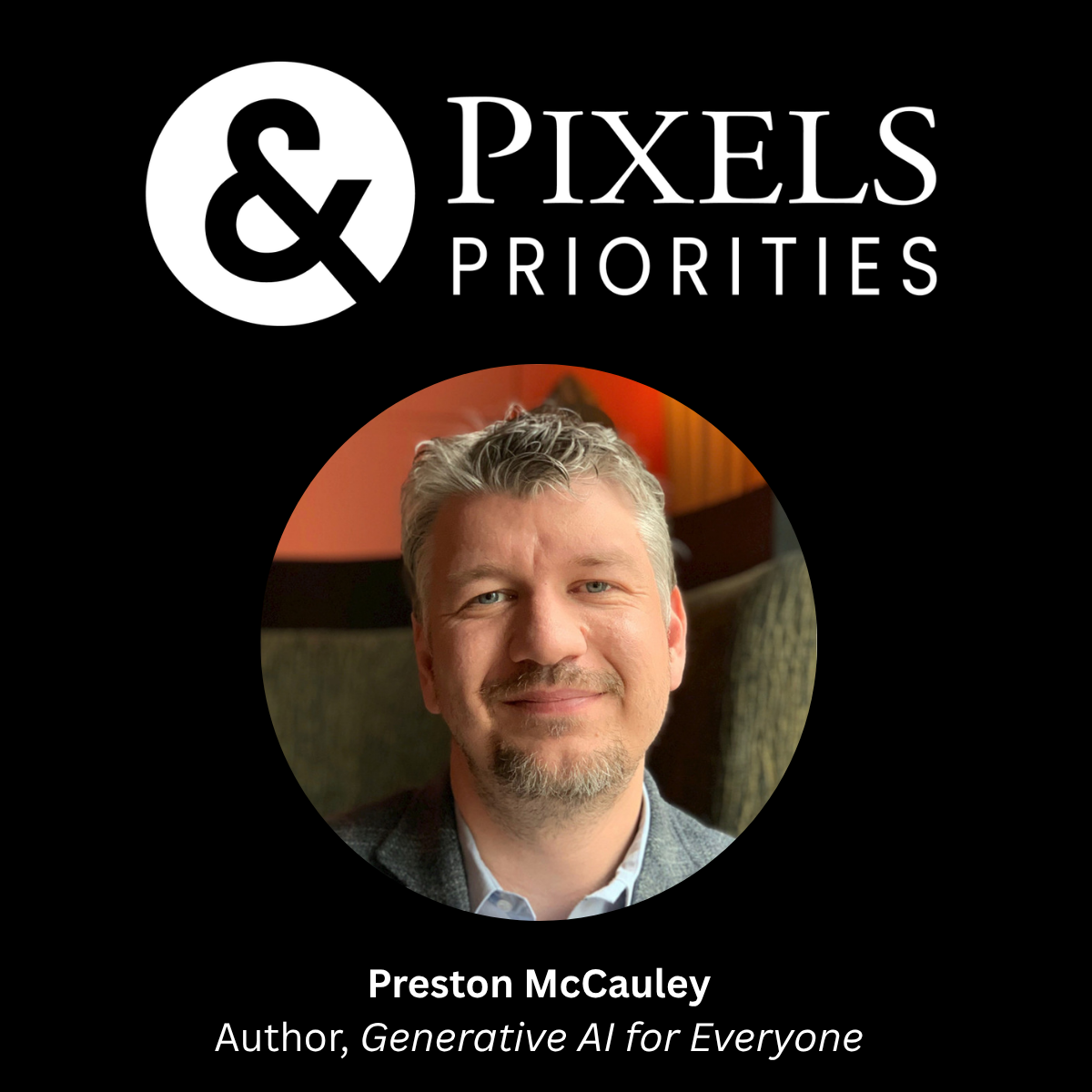
Preston McCauley joins us to explore AI orchestration, dynamic roadmaps, UX design evolution, and how AI is reshaping product management and digital product development.
🎧 Listen to this episode on Apple Podcasts, Spotify, or your favorite platform.
AI conversations in product management and UX design often swing wildly between two extremes.
On one side, there’s the hype machine promising instant innovation, fully automated workflows, and infinite productivity.
On the other, there’s fear: jobs disappearing, creative work becoming commoditized, and professionals struggling to keep up with the relentless pace of change.
Somewhere between those extremes lies a more practical and important conversation:
What actually happens when experienced product leaders and designers begin integrating AI thoughtfully into real workflows?
In this episode, J and I welcome Preston McCauley for a deep exploration of AI orchestration, product strategy, UX design evolution, and the future of digital product development. Drawing from decades of experience spanning UX, development, product management, and education, Preston offers a grounded but forward-looking perspective on how AI is reshaping the way teams build products.
And one of the biggest takeaways is not about replacing humans.
It’s about amplifying them.
AI Is Moving Beyond “One Tool Does Everything”
There is a potential misunderstanding around what modern AI workflows actually look like.
To many people outside the industry, AI still feels synonymous with a single chatbot interface. As Preston explains, the real power of generative AI comes from orchestration: combining multiple systems, workflows, models, and tools into connected ecosystems.
“The real unlock is understanding how to use it strategically—and making sure the human component stays in the experience.” — Preston McCauley
The future of AI in product management is unlikely to revolve around one magical platform replacing entire departments. Instead, organizations are increasingly experimenting with:
- AI-assisted research
- workflow automation
- design ideation
- code analysis
- dynamic testing
- customer insight synthesis
- product roadmap modeling
- AI-enhanced design systems
The shift is less “one AI replacing work” and more “many systems accelerating specific parts of work.”
And according to Preston, we are still early in that journey.
Tool Fatigue Is Real, but Methodology Still Wins
If there’s one feeling shared by nearly everyone in product leadership and UX design right now, it’s exhaustion from the sheer volume of AI tools flooding the market... and our LinkedIn feeds.
I personally find choosing the right AI tool to be overwhelming.
Preston offers a surprisingly reassuring perspective.
Rather than obsessing over mastering every new tool, he argues that long-term value comes from learning the underlying methodologies:
- systems thinking
- strategic prompting
- orchestration
- workflow integration
- validation
- cross-functional collaboration
“Tools will come and go. Technology will evolve. But what stays true is the methodology.” — Preston McCauley
While interfaces may change rapidly, the deeper skills remain remarkably durable:
- understanding users
- identifying pain points
- validating ideas
- designing usable experiences
- aligning business goals with customer needs
The tools evolve. Human-centered design principles do not disappear.
Product Strategy Is Becoming Dynamic
Preston discusses how AI could fundamentally reshape product roadmaps.
Traditional roadmap planning often works in long cycles:
- quarterly initiatives
- annual planning
- milestone forecasting
- fixed feature sequencing
AI-driven analysis changes the equation dramatically.
He explains how modern systems can compare scenarios, analyze markets, generate variants, and adapt recommendations in near real-time.
“Roadmaps become dynamic and modular—theme-based—with AI helping select what makes sense and compressing timelines from months to weeks.” — Preston McCauley
Does this signal a major evolution in product strategy?
Instead of static roadmaps slowly marching toward predetermined assumptions, organizations may increasingly adopt:
- adaptive prioritization
- real-time experimentation
- AI-assisted forecasting
- modular feature ecosystems
- dynamic customer response modeling
J jokingly summarizes the future this way:
“So instead of A/B testing, we’re talking A/B/C/D all the way to Z testing?” — J Schuh
And honestly… that may not be far from reality.
UX Design and Product Roles Are Expanding
AI is accelerating expectations across product management, UX design, development, and research. Product managers are increasingly expected to think visually and strategically. Designers are being asked to understand systems, business strategy, and even technical feasibility.
Rather than replacing expertise, Preston describes AI assistants as amplifiers:
tools that expand a professional’s capability without removing the need for human judgment.
“Not to replace them—to amplify.” — Preston McCauley
AI for designers may help:
- prototype faster
- validate ideas earlier
- explore more concepts
- reduce repetitive work
Meanwhile, AI in product management may help:
- synthesize research
- identify trends
- evaluate priorities
- model customer behavior
- accelerate documentation
Regardless of your role or the AI tools you use, you still need to guide the process.
Human-Centered Design Is Becoming More Important, Not Less
Despite all the futuristic discussion around orchestration, automation, and AI-enhanced systems, we do not fall into blind techno-optimism.
Instead, we stay focused on the importance of human expertise, validation, and ethics.
Preston repeatedly emphasizes the need to keep “humans in the experience,” especially as organizations scale AI-assisted workflows.
AI can generate outputs quickly, but it cannot independently determine:
- ethical implications
- emotional nuance
- accessibility considerations
- organizational readiness
- cultural impact
- customer trust
Listening to Preston describe his AI workflows, I thought about the process of throwing pottery (a new hobby). AI still requires knowledgeable people shaping and refining the output into something durable and useful.
AI may provide the clay.
But thoughtful product and design professionals still shape the sculpture.
The Future Is Faster… but Still Human
Toward the end of the episode, the conversation shifts toward a larger philosophical question:
Will AI actually create more breathing room for teams, or will organizations simply expect even more output?
It’s a concern many professionals already feel. I certainly do. Do you?
Historically, productivity tools rarely reduced workloads. Instead, they reset expectations.
AI may follow the same path.
Preston notes that despite technological acceleration, organizations are still constrained by:
- process
- culture
- adoption
- risk management
- communication
- trust
Technology alone does not transform organizations overnight.
People still do.
That may ultimately be the most important takeaway from this conversation.
AI is absolutely reshaping product management, UX design, and digital product development, yet meaningful products still require:
- thoughtful strategy
- human-centered design
- cross-functional collaboration
- ethical judgment
- customer empathy
- strong product leadership
The tools are changing rapidly.
The responsibility is not.
– Metsy
Co-host, Pixels & Priorities
Stay Connected
🎧 Listen to new episodes every Tuesday on Apple Podcasts, Spotify, or your favorite podcast platform. Please leave us a rating, submit a review, and share with a friend. It helps more people find the show and join the conversation.
Connect on LinkedIn: Metsy Rose | J Schuh | Pixels & Priorities